Hit enter to search
CLOSE
Table of Contents
• 1. Core Definition: What is Official Merchandise?
• 2. Core Attributes and Core Value
• 3. Universal Product Categories
• 4. Selection and Customization Principles
• 5. Budget Planning and Cost Control
• 6. End-to-End Execution Process
• 7. Operations and Distribution Logic
• 8. Compliance and Procurement Risk Guide
Official Merchandise refers to authorized, officially licensed products created and distributed by a brand, intellectual property (IP) owner, or event organizer. These products are developed under formal approval and are protected by copyright or trademark regulations.
The term consists of two key components:
• “Official” indicates legal authorization, compliance, and exclusivity granted by the rightful owner.
• “Merchandise” refers to tangible products designed for sale, distribution, or gifting purposes.
It is important to distinguish Official Merchandise from unauthorized or counterfeit products, generic promotional giveaways, and regular retail goods without IP affiliation. Official Merchandise represents a controlled extension of a brand or IP, ensuring authenticity, consistency, and legitimacy.
Official Merchandise is defined by three fundamental attributes:
• Authorized legitimacy: All products are produced under official licensing agreements, ensuring full compliance with intellectual property rights and eliminating legal risks.
• IP exclusivity: Each item is directly tied to a specific brand, IP, or event identity, making it unique and non-replicable without authorization.
• Commercial and emotional value: Official Merchandise combines functional utility with symbolic meaning, offering both practical use and collectible or commemorative significance.
Value for Different Stakeholders
• For brands or IP owners: Enhances brand recognition, strengthens identity consistency, and builds long-term brand equity while protecting intellectual property.
• For consumers or audiences: Provides access to authentic, high-quality products that foster emotional connection, loyalty, and a sense of belonging.
• For operators or organizers: Creates additional revenue streams and increases brand premium through controlled product ecosystems.
Official Merchandise can be broadly categorized into four universal types:
3.1 Essential Utility Items
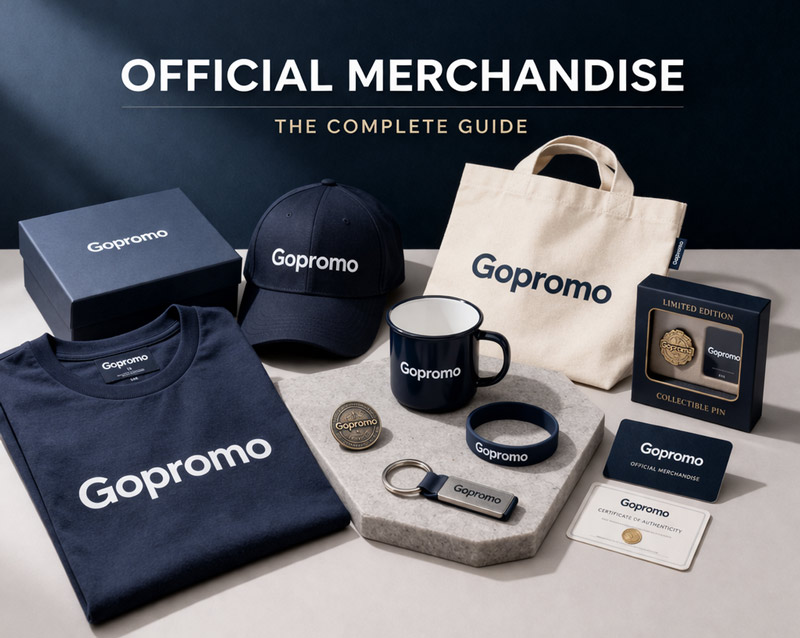
Designed for everyday use, these products prioritize practicality and accessibility. They typically serve a wide audience and offer stable demand. Examples include apparel, accessories, and daily-use items.
3.2 Commemorative and Collectible Items
Focused on exclusivity and emotional value, these products are often limited editions or specially designed for dedicated audiences. Examples include badges, limited-edition items, display collectibles, and themed gift sets.
3.3 Premium Quality Items
These products emphasize superior materials, craftsmanship, and presentation, often used for high-end gifting or brand elevation. They are intended to reflect brand prestige and enhance perceived value.
3.4 Cross-Over and Mass Appeal Items
Designed to reach broader audiences beyond core fans, these items prioritize versatility and general usability, helping expand brand exposure.
When developing or sourcing Official Merchandise, several critical principles must be followed:
• Ensure authorization first: All designs and production must be officially approved and documented.
• Maintain brand consistency: Visual identity, tone, and design elements must align with the brand or IP guidelines.
• Balance functionality and identity: Products should combine usability with recognizable branding elements.
• Match product to audience and scenario: Avoid unnecessary customization that does not align with user needs.
• Prioritize quality and craftsmanship: Official Merchandise must clearly differentiate itself from standard promotional products.
A structured budget allocation helps optimize both impact and efficiency:
• Essential Utility Items: 55%–65%
• Collectible Items: 20%–30%
• Premium and Cross-Over Items: 5%–10%
• Contingency Reserve: approximately 5%
Cost Control Strategies
• Utilize bulk production to reduce unit costs.
• Combine standardized product bases with customized branding.
• Minimize unnecessary tooling or complex processes.
• Implement phased production to reduce inventory risk.
A typical Official Merchandise project follows a structured workflow:
• Step 1: Authorization confirmation. Secure official licensing agreements before any development begins.
• Step 2: Design and sampling. Integrate brand identity into product design and validate through prototypes.
• Step 3: Mass production. Ensure strict quality control and timeline management during manufacturing.
• Step 4: Quality inspection and delivery. Conduct full inspections, verify branding compliance, and confirm delivery accuracy.
Adequate time should be reserved for design revisions, sampling, production, quality checks, and logistics to avoid delays. Clear policies should be established for defect handling, replacements, and reorders to meet the standards expected of authorized products.
Official Merchandise can be distributed through multiple channels:
• Gifting: Brand promotions, event giveaways, VIP gifts, and participant benefits.
• Retail sales: Online and offline channels, including official websites, e-commerce platforms, and physical stores.
• Collaborations: Cross-brand or cross-industry partnerships that expand reach and create new audience touchpoints.
Pricing Strategy
• Essential items: Competitive pricing for volume and accessibility.
• Collectible items: Premium pricing based on exclusivity and limited availability.
• Collaboration or custom items: Higher-value pricing that reflects differentiated brand value.
Inventory Management
Adopt small-batch, demand-driven production to reduce stock risk and improve responsiveness. Launch with limited quantities, evaluate market response, and then scale production accordingly.
When purchasing or customizing Official Merchandise, the following red lines and common pitfalls should be carefully avoided:
• Strict authorization compliance: Unauthorized products are absolutely prohibited for manufacture and sale.
• Material quality protection: Never misrepresent low-grade materials as official-grade products.
• Avoid blind over-stocking: Do not pursue excessive or overly niche product categories without market support.
• Rational customization: Avoid overly complex, high-cost production choices that do not match demand.
• Prevent delivery delays: Official Merchandise often requires longer lead times across licensing, design, approval, and manufacturing.
It is recommended to work with experienced professional suppliers to minimize these risks. A compliant supplier typically guarantees official materials, lawful authorization, and product quality assurance.
In recent years, the Official Merchandise sector has shown several major trends:
• Stronger standardization and copyright control: Global intellectual property protection continues to intensify.
• Sustainability: Eco-friendly materials, recyclable packaging, and longer product lifecycles are becoming mainstream.
• Personalization: Demand for customized engraving, short-run production, and exclusive designs continues to grow.
• Lightweight operations: Small-batch, fast-response production and data-driven launches are increasingly favored to reduce risk.
Cross-industry collaborations remain highly relevant, helping official merchandise reach broader audiences while maintaining authenticity and brand value.
The core concept of Official Merchandise can be summarized as: authorization as the foundation, IP value as the soul, and quality assurance as the standard.
To create successful Official Merchandise, the process must follow a clear order:
• First, ensure compliance and authorization.
• Then define the right product categories.
• Manage budget and production carefully.
• Finally, maintain strict quality control and operational discipline.
Only when legal authorization, brand consistency, and user value are all achieved can Official Merchandise deliver both brand communication and commercial value.
Gopromo is a specialized supplier focused on Official Merchandise, offering comprehensive solutions for brands, IP owners, and event organizers. With verified authorization capabilities and extensive experience, Gopromo supports a full range of product categories, including essential, collectible, premium, and cross-over merchandise.
Gopromo provides end-to-end services, from design and customization to production and delivery, ensuring compliance, quality, and efficiency across all stages. Whether for small-batch customization or large-scale procurement, Gopromo delivers flexible, reliable solutions tailored to official merchandise needs.
For inquiries or collaboration opportunities, clients are welcome to connect for tailored solutions.